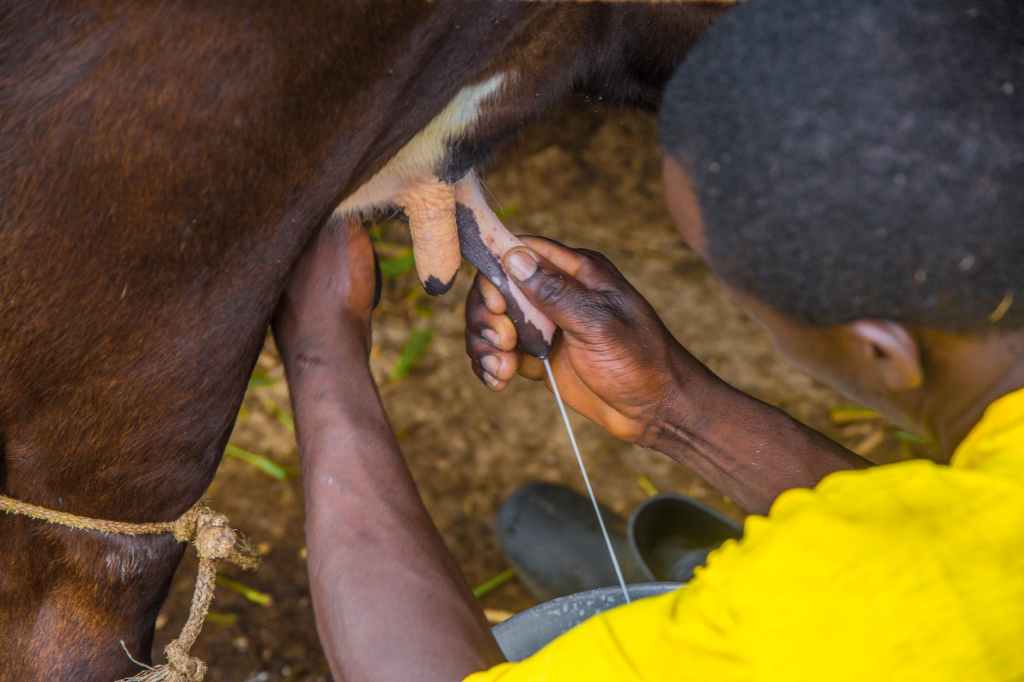
How much milk should children drink each day? Is there such a thing as too much milk? Can milk ever actually be harmful to your toddler?
Babies need breast milk or formula exclusively until they are six-months old. After this time, in addition to breast milk or infant formula, babies need to start eating regular food that includes protein and vitamins. Babies who do not eat enough iron rich solid food can quickly become anemic.
After their first birthday, babies who have a well rounded diet can come off formula or breast milk. The World Health Organization recommends that babies continue to breastfeed for two years, especially in countries that do not have reliably safe water or milk. One problem that we see world-wide is iron deficiency anemia caused by drinking too much cow’s milk. A mistake I commonly see in the pediatrician’s office is that parents assume that their one year old should drink as much cow’s milk as that had been drinking formula or breast milk. Most pediatricians recommend that babies over 12 months of age drink nor more than 16 ounces (600 ml) of whole milk each day.
What Happens in the Body?
There is a product in cow’s milk that works with the calcium to keep the human body from absorbing iron from protein. Even if the child is eating plenty of protein, the iron is not getting absorbed. Iron is necessary for the body to make red blood cells. If there is not enough iron in the body, then the body doesn’t have what it needs to build red blood cells and the child can become anemic. Red blood cells play an important role in the body of carrying oxygen to all of the cells. When a child is anemic they can have low energy, get dizzy, vomit, or even pass out.
Another way a child can become anemic is if they don’t eat enough iron rich foods. Too much milk can cause the toddler to feel full and not want to eat. Also, too much milk can be constipating , causing the toddler to not want to eat.
Naturally, babies lose a little bit of blood in through their intestines. When a small baby drinks cow’s milk, this can result in more blood loss. Too much blood loss can further intensify anemia.
How do I Know if my Child is Anemic?
We screen for anemia at routine preventive health well child visits at 12 months and 24 months. A finger stick will allow us to collect a hemoglobin. When a child’s hemoglobin is below the normal range (<11 g/dl) they are anemic and need an iron supplement.
Here are some signs and symptoms of anemia:
- Paler than normal complexion
- Tiredness and weakness
- Shortness of breath
- Cravings for non-food items like clay, dirt, chalk, soap, or ice
- Behavioral problems
- Brittle hair or nails
- Pale insides of lower eyelids (conjunctival pallor)
- Pale crease lines on palms when fingers are gently pulled back
(from Nation Wide Children’s “Iron Deficiency Anemia Related to Milk Consumption”)
What Should I do if I Think my Child is Anemic?
Schedule an appointment with your child’s pediatric provider. Every country I have lived internationally has had the capability to run a CBC (in Malawi we called it a full blood count). This examines the hemoglobin as well as the size and color of the red blood cells. Small, pale red blood cells are a sign of anemia. Some countries have resources to further test the iron levels to see if iron deficiency is the true cause of the anemia. It would also be helpful if you keep a record of what your child typically eats and drinks in a day.
How Can I Prevent Anemia?
- Babies under a year of age should not consume cow’s milk or goat’s milk alone, but should have human breast milk or infant formula if they live in a country with safe water.
- After six months of age, every baby needs to begin consuming iron rich table foods.
- From ages 1-5 every child needs three servings of iron rich food per day. The best source of iron is an animal source protein. (Other sources of iron include fortified green vegetables or fortified cereals.)
- Serve iron rich foods with a food containing Vitamin C (citrus fruits, strawberries, peppers, potatoes, etc…) Vitamin C helps the body absorb iron.
- If your child is a picky eater and is not getting enough iron in the diet, then you may add a multivitamin with iron.
What if my child has Iron Deficiency Anemia?
First, drastically cut back on milk. I have had patients that have consumed so much milk that they became anemic enough to need a blood transfusion. As soon as they eliminated cow’s milk from the diet, added iron drop supplements, and started ensuring their child got iron rich foods, the child’s condition improved dramatically. After the iron stores in the blood were replenished they were able to stop taking the iron drops. Your doctor may advise you to give a multivitamin with iron or iron drops. The iron drops can stain the teeth, so be sure to squirt it in the back of the corners of the mouth and rinse with water or follow with juice or apple sauce. A lot of my patient’s like NovaFerrum. Kids seem to like the taste and it can be purchased on Amazon.
How Can I Help?
Spread the word about the significance of iron deficiency anemia. Children in developing countries are at increased risk of anemia due to diets low in iron rich foods and chronic disease such as diarrhea and malaria. Encourage parents in these countries to breastfeed until two years of age and to add animal sourced protein and vitamin C at 6 months of age. Discourage anyone from introducing cow’s or goat’s milk before 12 months of age. Because milk is more affordable than formula, some parent’s think this is an option, but it’s dangerous. Finally, cut out the night time bottles, and ensure your child doesn’t drink more than 16 ounces (600 ml) of milk a day.
 Healthy Global Kids